Ian Brown wins Charles Taylor Prize
This just in: Globe and Mail scribe Ian Brown is the winner of this year’s Charles Taylor Prize for Literary Non-fiction, which was awarded this afternoon at a gala luncheon in Toronto. The prize, worth a cool $25,000, went to Brown’s memoir The Boy in the Moon: A Father’s Search for His Disabled Son (Random House Canada).
Brown beat out John English’s Just Watch Me: The Life of Pierre Elliott Trudeau, 1968–2000 (Knopf Canada), Daniel Poliquin’s René Lévesque (Penguin Canada), and Kenneth Whyte’s The Uncrowned King: The Sensational Rise of William Randolph Hearst (Random House Canada). Watch Q&Q Omni for a full report later this afternoon.
British Library to offer free downloads of public domain books
Jane Austen’s Pride and Prejudice, Charles Dickens’s Bleak House, and Thomas Hardy’s The Mayor of Casterbridge are among 65,000 works of 19th-century fiction that the British Library is set to offer as free digital downloads this spring. However, according to an article in the Times Online, the project, which is being funded by Microsoft, will be available only to owners of Amazon’s Kindle. The Times article also indicates that Amazon users will be able to order bound copies of the books, priced between £15 and £20. The printed books, like the scanned e-books, will resemble the originals in the British Library collection, down to their typefaces and illustrations.
From the Times:
Books to be made available will include Victorian classics such as A Strange Story by Edward Bulwer-Lytton and The Story of a Modern Woman by Ella Hepworth Dixon.
Many of the downmarket books known as “penny dreadfuls” will also be made available to the public, including Black Bess by Edward Viles and The Dark Woman by J M Rymer.
Altogether, 35%-40% of the library’s 19th-century printed books – now all digitised – are inaccessible in other public libraries and are difficult to find in second-hand or internet bookshops.
Quillblog wonders whether the solution to this inaccessibility is to allow only those with a specific electronic reading device to download the digital titles. Would it not be better to make the e-books available to everyone, regardless of what e-reader is being employed to view the content?
Autonomous Robots, Sleep Disorders, and Potato Chemistry: Diagram Prize longlist announced
Last year’s unlikely blockbuster Pride and Prejudice and Zombies has made the longlist for one of Quillblog’s favourite literary awards: the Bookseller’s annual Diagram Prize for the year’s oddest title.
P&P&Z is something of a surprise inclusion, and is nowhere near the oddest title on the list, which also includes Peek-a-poo: What’s in Your Diaper?, Governing Lethal Behaviour in Autonomous Robots, and I Stopped Sucking My Thumb … Why Can’t You Stop Drinking?
Horace Bent, the prize’s administrator, told the Guardian that he received 90 submissions for this year’s award – close to three times as many as last year.
“The adage that everyone has a book in them may well be true, but that doesn’t mean every Tom, Dick and Harry out there can bash a few words out on a keyboard and then upload it to Scribd with a humorous title like The Historic Adventures of the Purple Waffle Iron on His Horse Made of Asparagus, and then think they have a chance at winning my prestigious award. I refuse to acknowledge such submissions,” Bent said.
Titles with a strong chance of making the shortlist – which will be announced on 19 February – include Dental Management of Sleep Disorders, Mickey Mouse, Hitler and Nazi Germany and Advances in Potato Chemistry and Technology, Bent added. Once the shortlist is revealed, the public will then be asked to vote for their favourite, with the winner to be announced on 26 March.
Last year’s prize went to The 2009–2014 World Outlook for 60-milligram Containers of Fromage Frais. Previous winners include Living with Crazy Buttocks, Oral Sadism and the Vegetarian Personality, and How to Avoid Huge Ships.
Charles Taylor Prize nominees in the 11th hour
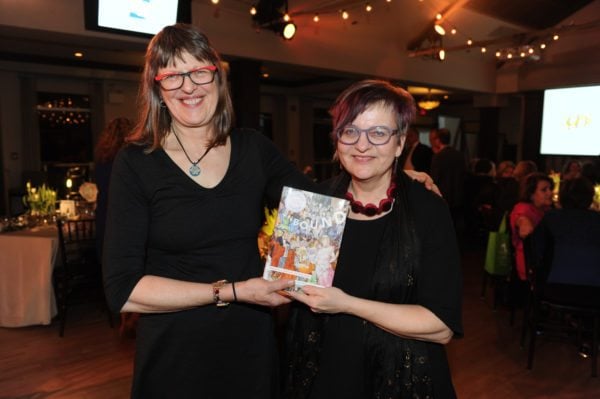
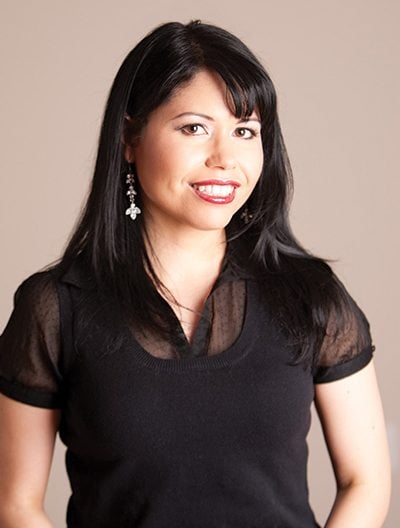
(L-R) Ian Brown (The Boy in the Moon: A Father’s Search For His Disabled Son), John English (Just Watch Me: The Life of Pierre Elliott Trudeau, 1968-2000), Daniel Poliquin (René Lévesque), and Kenneth Whyte (The Uncrowned King: The Sensational Rise of William Randolph Hearst). On Sunday morning, just 24 hours before the winner of the Charles Taylor Prize for Literary Non-fiction was set to be announced, Toronto bookseller Ben McNally hosted his annual Books and Brunch event to honour this year’s four nominees. In a tradition he has continued since the very first Charles Taylor Prize was awarded in 2000, book lovers gathered at the King Edward Hotel to enjoy a meal and hear each nominee speak about the writing process.

To kick off the event, Ben McNally introduced prize trustee Noreen Taylor, who established the prize to honour her late husband. “I’m going to try not to get really teary-eyed here, but this prize means a lot to me,” McNally said during the event. “When I split from my former employer – who will remain nameless – the Taylor Prize stood by me, and that really means a lot. The relationship I have with the trustees, and most specifically Noreen Taylor, are relationships that I cherish deeply. Charles Taylor himself was a customer of mine and I can think of no more fitting memorial to his extraordinary life than this prize and all that it stands for.”
Will the big “A” remove Twilight buy buttons?
It’s not difficult to imagine Amazon CEO Jeff Bezos fluttering his fingertips together and ordering Smithers to remove the buy buttons on book pages that don’t please him. Amazon has yet to allow customers to purchase Macmillan titles due to a dispute over e-book pricing, despite the fact that it announced last Friday it will “capitulate”.
Last night Hachette CEO David Young announced its support of Macmillan, following a similar move from HarperCollins on Wednesday.
From a letter sent out by Young to agents (via MobyLives):
At Hachette Book Group, we have been considering a new pricing model for some time, and have decided to transition to selling our e-books through an agency model. There are many advantages to the agency model, for our authors, retailers, consumers, and publishers. It allows Hachette to make pricing decisions that are rational and reflect the value of our authors’ works.
In the long run this will enable Hachette to continue to invest in and nurture authors’ careers – from major blockbusters to new voices. Without this investment in our authors, the diversity of books available to consumers will contract, as will the diversity of retailers, and our literary culture will suffer.
With three out of six of the big U.S. publishers supporting the Apple-approved agency sales model, Amazon isn’t likely to continue stealth removal tactics, especially with a Twilight-powered company like Hachette. How long can Bezos hold out before making a public statement?
Perhaps Jobs and Bezos are actually sitting in a room together, planning this all out and cackling before they release the hounds.
The book industry: this week in quotes
“I suddenly understood what fiction was for…I had to read books that I wouldn’t have necessarily read. I had to read them well and I had to read them in a short space of time. Back to back. Annie Proulx and Margaret Atwood and Beryl Bainbridge and Anne Michaels – boom, boom, boom. And I started to realise what fiction could be. And I thought, wow! You can be ambitious, you can take on the world – you really can.” – Andrea Levy, on judging the 1997 Orange Prize
“It’s important to note that we are not looking to the agency model as a way to make more money on e-books. In fact, we make less on each e-book sale under the new model; the author will continue to be fairly compensated and our e-book agents will make money on every digital sale. We’re willing to accept lower return for e-book sales as we control the value of our product–books, and content in general. We’re taking the long view on e-book pricing, and this new model helps protect the long term viability of the book marketplace.” – David Young, CEO of Hachette Book Group, in a letter to agents supporting Macmillan and the agency pricing model for e-books
“We are removing Amazon.com links from our website. Our authors depend on people buying their books and since a significant percentage of them publish through Macmillan or its subsidiaries, we would prefer to send traffic to stores where the books can actually be purchased.” – The Science Fiction and Fantasy Writers of America
“Forlorn as this hope may be, I can only fantasize that at least you might read my letter through and consider the pleasures and prestige of being an author at Faber, the last great family-owned independent publishing house in the western hemisphere.” – Faber editorial director Lee Brackstone in an open letter to Morrissey requesting he publish a memoir with Faber
Social Media Week: The joys and perils of Twitter
At about 12:55 this afternoon, panelists at Toronto’s Social Media Week busily tweeted to the world, inviting last-minute guests to join the discussion about book marketing in the digital age: “Some seats open at my #smwto panel! Come by and see me, @bookmadam and @tragicrighthip shoot some smack,” tweeted Erin Balser, aka @booksin140.
It was a fitting start to a discussion on how social media is affecting the publishing industry. Rounding out the panel were Balser (@booksin140 and writer for Books@Torontoist); Julie Wilson (founder of Book Madam and guest host for CBC’s online book club); Deanna McFadden (marketing manager for HarperCollins Canada); and in the dual role of moderator and co-panelist, author Arjun Basu.
McFadden emphasized how valuable it can be for authors to market their books online during the pre-publication process, using Twitter and Facebook to reach a very specific audience. Instead of reaching readers through traditional book reviews and ads, readers can now find out about the writing process of authors, and in some cases, even their personality. And while there was discussion over the generational divide in using social media tools, McFadden pointed out that even Margaret Atwood has gotten in on the Twitter action.
What about the perils of Twitter? McFadden warned that while authors should feel free to tweet as they please, they must remember there can be consequences – for instance, she advises authors to keep their feelings about a negative review in check, no matter how angry you feel at the time. “This is just not a good thing to do at all,” McFadden said. “Twitter makes you forget that really, you should have a filter – or at least realize there’s going to be a reaction to [what you say.]”
A brand can also be important when using Twitter. Basu is known for posting 140-character short stories called “Twisters” on his account, and currently has more than 13,000 followers. He noted, however, that when he used that same account to broadcast his personal commentary on the Golden Globe Awards, he actually lost some followers. “I was off-brand,” he said. “When they signed up to follow my tweets, they didn’t sign up to hear what I think about Sandra Bullock.”
The idea for Basu’s Twisters came from Ernest Hemingway’s famous six-word short story: “For sale: baby shoes, never worn.” And since Basu is now well-known for these succinct stories, he says his publisher considers him all the more marketable for it.
Prime Crime closes up shop
Prime Crime Mystery Bookstore, a popular shop in Ottawa’s Glebe neighbourhood, has announced it will close its doors on March 13th. The store opened in 1985, and owner Linda Wiken, who is also a crime writer, has been running it since 1995. Wiken told the Ottawa Citizen she had been trying to sell the store for over a year, and that it was “just time to move on.”
Despite the presence of big-box book retailers in Ottawa, Prime Crime carved out of a niche for itself. The 300-square-foot store with the skeleton in the window won the 2001 Canadian Booksellers Association award as specialty bookseller of the year.
HarperCollins steps into the ring of the Amazon vs. Macmillan battle
While Amazon has yet to fully reinstate Macmillan titles on its website, another potential threat looms on the horizon for the online retailer. Rupert Murdoch, chairman and CEO of News Corp. – the huge media conglomerate that owns HarperCollins – said about e-readers during a conference call yesterday that “devices and platforms are proliferating, but this clever technology is merely an empty vessel without any great content.” Further taking the side of the publishers in the Amazon vs. Macmillan battle, Murdoch had this to say (via All Things Digital):
We don’t like the Amazon model of selling everything at $9.99. They don’t pay us that. They pay us the full wholesale price of $14 or whatever we charge. We think it really devalues books and it hurts all the retailers of the hardcover books. We are not against [inaudible] books. On the contrary, we like them very much indeed. It is low cost to us and so on. But we want some room to maneuver in it.
Murdoch also said that Apple has already agreed to “a variety of higher prices” for e-books, and that Amazon is ready to renegotiate pricing with News Corp. Will the clout of a publisher like HarperCollins force Amazon to allow higher prices? Will customers be willing to cough up more than $9.99 for an e-book, despite online protests? Or will the higher prices deter readers from investing in the high-priced Kindle at all?
One thing’s for sure: the publishing industry is being brought together by a common enemy, as demonstrated today at the America Booksellers Association’s Winter Institute. Galleycat reports that when Macmillan’s stand against Amazon was mentioned at the event, the company received an enthusiastic standing ovation.
Lynn Henry named publishing director for Doubleday Canada
Lynn Henry, currently the publisher of House of Anansi Press, has been named publishing director for Doubleday Canada. According to a press release signed by Kristin Cochrane, Doubleday’s new publisher (following the recent departure of Maya Mavjee), Henry “will acquire and edit her own list, as well as work closely with the editorial team on their acquisitions and editorial development.” Henry will begin at Doubleday on March 1.
Henry became Anansi’s publisher in 2005, after a stint as editor for Raincoast Books’ now-defunct publishing program.
Watch Q&Q Omni for more coverage.